Brain Traumatic Injury
What is Traumatic Brain Injury?
Traumatic Brain Injury (TBI) is a complex and potentially life-altering condition that occurs when the brain is damaged by an external force — such as a blow, bump, or jolt to the head.
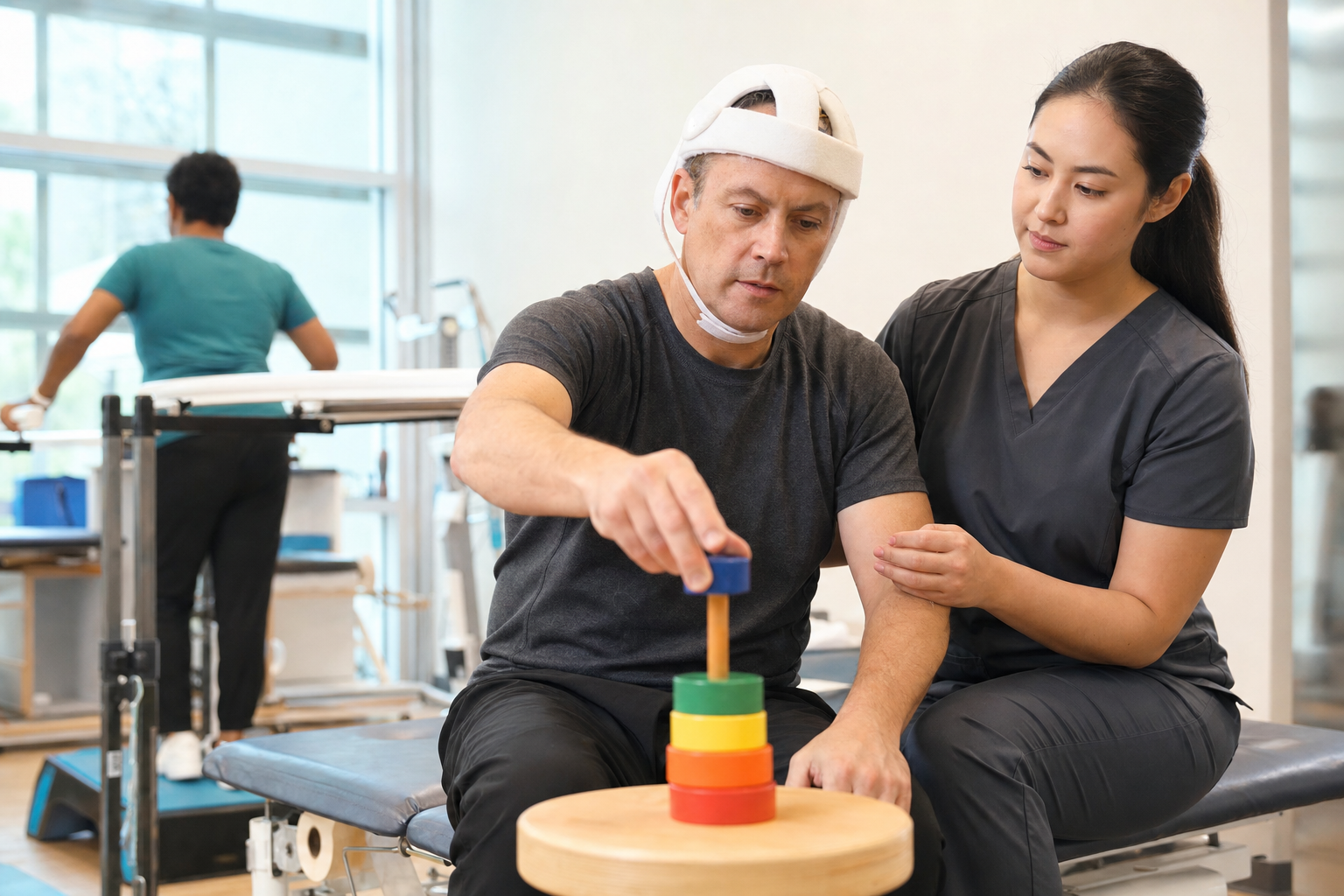
TBI ranges from mild (a brief change in awareness, such as a concussion) to severe (extended unconsciousness or lasting impairment). Effects can involve movement, balance, memory, concentration, speech, and emotions, so recovery often needs a coordinated rehabilitation team.
 NeuroGrow
Symptoms of Traumatic Brain Injury
Symptoms depend on how severe the injury is and may appear immediately or develop over hours to days. Common symptoms include:
- Headache, dizziness, or loss of consciousness
- Confusion, memory, or concentration problems
- Nausea or vomiting
- Weakness or numbness in the limbs
- Difficulty with speech, balance, or coordination
- Mood, sleep, or behaviour changes
Causes of Traumatic Brain Injury
TBI is caused by a sudden external impact or force affecting the head and brain. Common causes include:
- Falls, especially in children and older adults
- Road traffic and vehicle accidents
- Sports and recreational injuries
- Physical assaults or violence
- Blast or explosion-related injuries
- Being struck by or against a hard object
Treatment
Recovery from TBI is a gradual, individualised process. At NeuroGrow we design intensive neuro-rehabilitation programs that help patients relearn skills and rebuild independence step by step.
Physiotherapy
Rebuilding strength, balance, and coordination through structured movement and gait training tailored to each stage of recovery.
Cognitive & Occupational Therapy
Retraining memory, attention, and everyday tasks so patients can return to self-care, work, and daily routines with confidence.
Advanced Neuro-Tools
Functional electrical stimulation and supportive equipment help stimulate neural relearning and restore purposeful movement.