Nise Estim
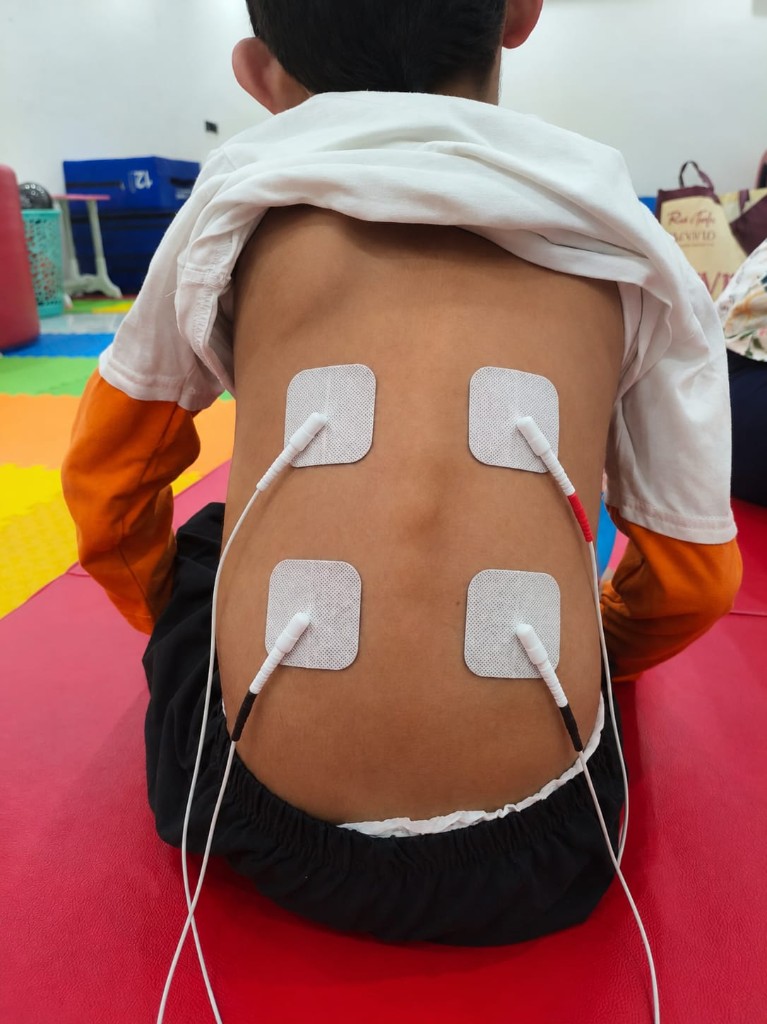
Functional electrical stimulation (FES) uses low-level impulses delivered through small adhesive electrodes to activate targeted muscles. At NeuroGrow, it is applied during meaningful activities to strengthen weak muscles, improve timing, and reduce spasticity.
 NeuroGrow
What FES Targets
Strength, coordination, endurance, sensory feedback, and muscle timing — all essential for smooth, controlled movement in children with neurological conditions.
Activity-Based Application
Stimulation is timed with functional tasks — not used in isolation — so the brain associates muscle activation with real actions like grasping, stepping, or posture control.
How Sessions Work
Therapists place electrodes on specific muscle groups and adjust intensity while the child performs guided exercises. FES can be used on the arms, legs, back, and hands within physiotherapy, occupational therapy, and speech-related motor sessions.
Supporting Recovery Goals
For muscles that are weak or poorly coordinated, FES helps bridge the gap — encouraging contraction when voluntary effort alone is not enough, and assisting with spasticity management over time.